The Environmental Protection Agency (EPA), through its Investigations and Enforcement Department, has recorded notable improvements in environmental compliance across several communities during the period January to December 2025. The findings reflect the impact of targeted enforcement, follow-up inspections, and sustained engagement with operators.
Scope of the Assessment
The assessment focused on eight communities: Canal Polders (Belle West and L’Esperance), La Bonne Intention, Success, Good Hope, Mon Repos, Lusignan, Tuschen, and Uitvlugt. These areas were selected due to recurring complaints mainly related to noise and air pollution from activities operating within residential zones.
Overall Improvement in Compliance
Canal Polders were the most notable, achieving about 90% compliance by the final quarter of 2025. This improvement was attributed to corrective actions such as the relocation of operations, installation of enclosures, and the use of extractor fans. On the other hand, communities including Good Hope, Mon Repos, and Lusignan showed steady progress, recording compliance rates between 50 and 70%. Dust control measures, improved ventilation, and technical guidance contributed to reduced emissions and lower noise levels.
Communities Requiring Continued Attention
Uitvlugt recorded the lowest compliance rate at 25%, identifying it as a priority area for intensified enforcement. Despite the issuance of orders and directives, adherence remains limited, underscoring the need for closer oversight and sustained EPA intervention in 2026.
How the Assessment Was Conducted
The assessment was conducted using a structured approach that included:
- Reviewing complaints from residents and
- Neighbourhood Democratic Councils (NDCs)
- Conducting site inspections
- Measuring air quality and noise levels
- Classifying operations based on compliance status
- Issuing enforcement actions such as warnings, compliance orders, and prohibition notices
- Undertaking follow-up inspections to verify corrective measures
Notably, an increase in follow-up inspections was conducted in the last quarter of the assessment period, with 75 per cent of enforcement actions resulting in measurable improvements.
Key Trends Identified
The assessment found that hollow block-making operations showed the greatest level of improvement once dust suppression and enclosure measures were implemented. In contrast, furniture, spray painting, and fabrication workshops continue to lag due to inadequate ventilation systems and delayed corrective action. Communities with strong engagement and cooperation with the EPA consistently recorded higher compliance levels, while resistance or limited cooperation contributed to ongoing challenges in other areas.
Strengthening Compliance Going Forward
The EPA concludes that enforcement actions supported by technical guidance are effective in improving compliance levels. Moving forward, the Agency will:
- Prioritise lagging communities for intensified monitoring in early 2026
- Expand compliance assistance programmes for small-scale operators
- Apply graduated penalties for repeat offenders while recognising consistently compliant operators
- Repeated assessment of hotspot communities
The EPA remains committed to protecting public health and the environment through sustained enforcement, collaboration with local authorities, and continued engagement with communities.
You can share your ideas and questions by sending letters to: “Our Earth, Our Environment”, C/O Communications Department, Environmental Protection Agency, Ganges Street, Sophia, GEORGETOWN, or email us at: communications@epaguyana.org. Follow us on Facebook and Instagram and subscribe to our YouTube channel.
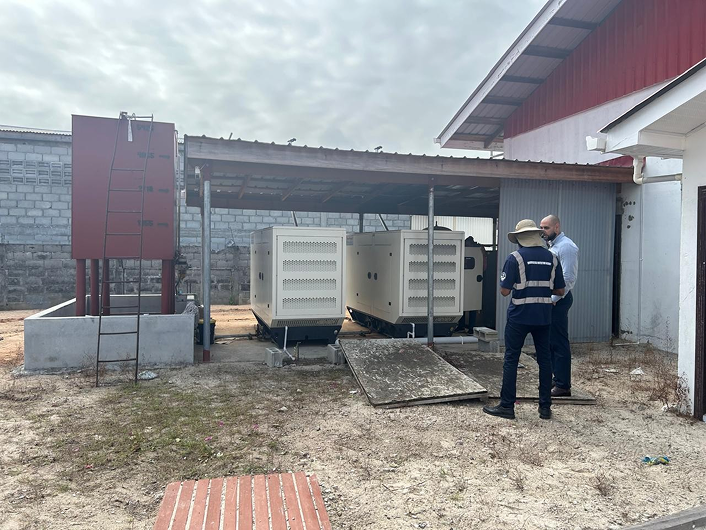
Investigating
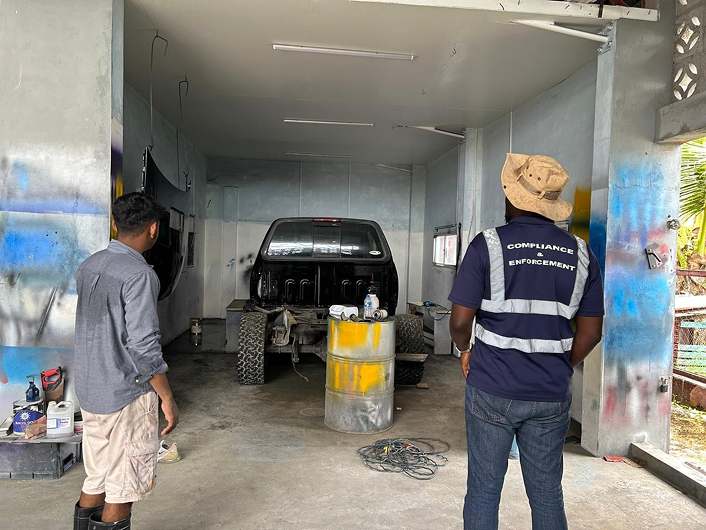
Officer engaging in spray painting operator

Conducting Noise Assessment
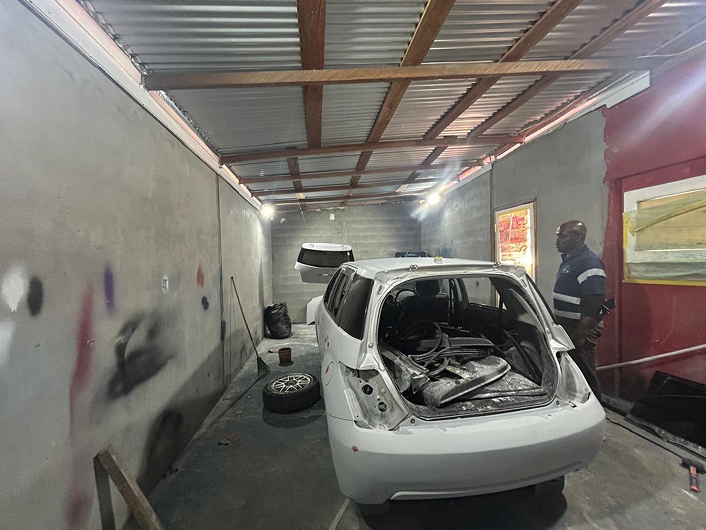
Conducting Noise Assessment

 Environmental Protection Agency